
What Is Net Metering and How Does It Work in India?
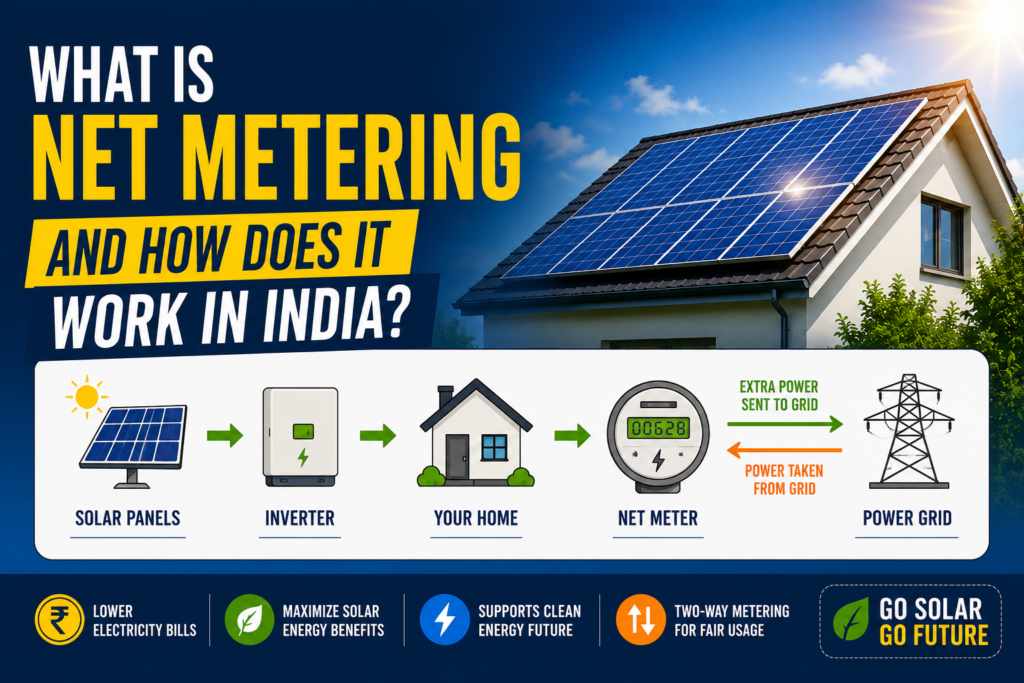
One of the biggest advantages of installing a rooftop solar system in India is the ability to significantly reduce your electricity bills through net metering. While many homeowners understand that solar panels generate electricity from sunlight, they are often unsure about what happens when their system produces more electricity than they consume. This is where net metering plays a crucial role.
Net metering is a billing mechanism that allows owners of grid-connected solar systems to export excess electricity to the utility grid and receive credits in return. Instead of letting surplus solar power go to waste, homeowners can send it back to the electricity distribution company (DISCOM), reducing future electricity charges.
This system has become one of the primary reasons why rooftop solar installations are growing rapidly across India. Combined with government subsidies and declining solar installation costs, net metering enables homeowners to maximize their return on investment while contributing to the country’s renewable energy goals.
Whether you’re planning to install a residential rooftop solar system or simply want to understand how solar billing works, this guide explains everything you need to know about net metering in India, including how it works, its benefits, eligibility requirements, and the application process.
1. What Is Net Metering?
Net metering is a billing arrangement available for grid-connected (on-grid) solar systems that allows consumers to both consume electricity from the grid and export excess solar electricity back to it.
A special bi-directional (net) meter records:
Electricity imported from the grid
Electricity exported to the grid
Instead of using a traditional one-way electricity meter, the net meter measures electricity flowing in both directions.
When your solar panels generate more electricity than your home consumes, the excess power is automatically supplied to the utility grid. During periods when your solar system is not producing enough electricity, such as at night, your home draws electricity from the grid.
This two-way exchange forms the basis of net metering.
2. How Does Net Metering Work?
The operation of net metering is simple and automatic.
During sunny daytime hours:
Solar panels generate electricity.
Your home first uses the electricity produced.
Any surplus electricity is exported to the utility grid.
During evenings or cloudy weather:
Solar generation decreases.
Your home imports electricity from the grid.
At the end of the billing cycle, the electricity distribution company calculates:
Total electricity imported
Total electricity exported
Net electricity consumption
Final bill after adjusting export credits
If your solar system generates more electricity than you consume during the billing period, the exported units are credited according to your local DISCOM’s net metering policy.
3. Components Required for Net Metering
A net metering system includes several important components.
These include:
Solar Panels
Grid-Tied Inverter
Bi-Directional (Net) Meter
Mounting Structure
AC Distribution Box (ACDB)
DC Distribution Box (DCDB)
Earthing System
Lightning Protection System
Among these, the net meter is the key component that records both imported and exported electricity.
Without a bi-directional meter, excess solar energy cannot be accurately measured or credited.
4. Benefits of Net Metering for Homeowners
Net metering provides several financial and environmental advantages.
Major benefits include:
Significant reduction in electricity bills
Better return on solar investment
Efficient utilization of surplus solar energy
Lower dependence on grid electricity
Increased savings over the life of the system
Support for clean energy generation
Reduced carbon footprint
Higher value from rooftop solar installations
Instead of wasting excess electricity during the day, homeowners receive credits that offset electricity consumption at other times.
This improves the overall financial performance of a rooftop solar system.
5. Who Is Eligible for Net Metering in India?
Net metering is generally available for consumers installing grid-connected rooftop solar systems, but eligibility varies by state and local electricity distribution company (DISCOM).
Typical eligibility requirements include:
Residential, commercial, or institutional electricity connection (subject to state regulations)
Approved rooftop solar installation
Compliance with DISCOM guidelines
Successful technical inspection
Installation of a bi-directional meter
Completion of required documentation
Since net metering policies differ across states, homeowners should consult their local DISCOM or authorized solar installer before installation.
6. How to Apply for Net Metering
Although procedures vary slightly across states, the application process generally follows these steps:
Step 1: Choose an approved solar installation company.
Step 2: Submit a rooftop solar application to your local DISCOM.
Step 3: Receive technical feasibility approval.
Step 4: Install the rooftop solar system.
Step 5: Request inspection and net meter installation.
Step 6: DISCOM verifies the installation.
Step 7: The bi-directional net meter is installed.
Step 8: Your solar system is connected to the electricity grid and begins exporting excess electricity.
Professional solar installers often assist homeowners throughout the application and approval process.
7. Common Misconceptions About Net Metering
Many first-time solar buyers misunderstand how net metering works.
Some common myths include:
Myth 1: Solar panels stop working when electricity is exported.
Reality: Your solar panels continue generating electricity whenever sunlight is available.
Myth 2: Exported electricity is wasted.
Reality: Excess electricity is supplied to the utility grid and credited according to applicable policies.
Myth 3: Net metering eliminates electricity bills completely.
Reality: While many homeowners significantly reduce their bills, the final amount depends on electricity consumption, system size, seasonal generation, and local billing regulations.
Understanding these facts helps homeowners make informed decisions before investing in solar energy.
8. Tips to Maximize Savings Through Net Metering
To get the maximum benefit from net metering, consider the following best practices:
Install the correct solar system size.
Use high-efficiency solar panels.
Choose a quality grid-tied inverter.
Keep solar panels clean.
Monitor electricity generation regularly.
Use high-power appliances during daytime when solar production is highest.
Complete annual system maintenance.
Work with an experienced solar installation company.
Optimizing system performance increases the amount of electricity available for self-consumption and export, maximizing long-term savings.
Conclusion
Net metering is one of the most valuable features of a grid-connected rooftop solar system in India. By allowing homeowners to export surplus electricity to the utility grid and receive credits in return, it significantly improves the financial benefits of investing in solar energy. Instead of wasting excess electricity generated during the day, consumers can offset their future electricity consumption, leading to substantial reductions in monthly power bills.
Combined with government subsidies, falling installation costs, and advancements in solar technology, net metering has made rooftop solar more affordable and attractive than ever before. Whether you’re looking to reduce electricity expenses, achieve greater energy independence, or contribute to a cleaner environment, understanding how net metering works is essential before installing a solar power system.
If you’re planning to switch to solar, consult a trusted solar installation company to evaluate your property’s energy requirements, explain your state’s net metering regulations, and assist you with the approval process. With the right system and proper planning, net metering can help you maximize your solar investment and enjoy reliable, cost-effective electricity for decades.