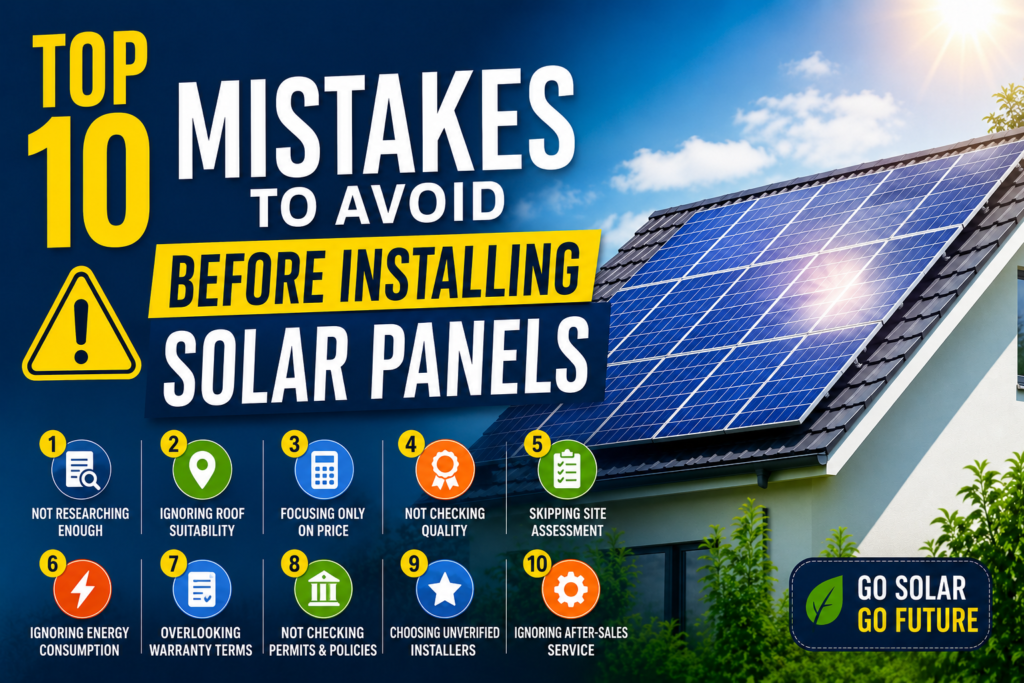
Top 10 Mistakes to Avoid Before Installing Solar Panels
Installing solar panels is one of the best investments you can make for your home or business. With rising electricity costs, growing environmental awareness, and government incentives, solar energy has become an increasingly popular choice across India. A well-designed solar power system can significantly reduce your electricity bills, increase your property’s value, and provide clean, renewable energy for more than 25 years.
However, while solar technology has become more affordable and efficient, many homeowners make costly mistakes before and during the installation process. These mistakes can reduce system performance, increase maintenance costs, delay return on investment, and even create safety risks.
Choosing the wrong system size, purchasing low-quality equipment, ignoring roof conditions, or hiring inexperienced installers are just a few examples of mistakes that can affect the long-term efficiency of your solar investment.
The good news is that most of these problems are completely avoidable with proper planning and guidance. Understanding what to look for before installation will help you make informed decisions and ensure your solar system delivers maximum savings and performance.
In this comprehensive guide, we’ll discuss the top mistakes to avoid before installing solar panels and explain how to make your transition to solar energy smooth, safe, and cost-effective.
1. Choosing the Wrong Solar System Size
One of the most common mistakes is installing a solar system that is either too small or unnecessarily large for your electricity needs.
Many homeowners select a system based only on price instead of their actual energy consumption. An undersized system may not generate enough electricity to reduce your bills significantly, while an oversized system can increase your upfront investment without delivering proportional benefits.
Before deciding on a system size, consider:
-
Your monthly electricity bills
-
Average daily energy consumption
-
Number of household members
-
Future electricity requirements
-
Electric vehicle charging plans
-
Air conditioner usage
-
Additional appliances planned in the future
A professional energy assessment helps determine the ideal system capacity for maximum efficiency and return on investment.
2. Ignoring Roof Condition and Sunlight Availability
Your roof plays a crucial role in the performance of a solar power system. Installing solar panels on a damaged or weak roof can lead to expensive repairs later.
Before installation, your roof should be evaluated for:
-
Structural strength
-
Roof age
-
Waterproofing condition
-
Available installation space
-
Orientation toward the sun
-
Roof slope
-
Future renovation plans
Another important factor is shading.
Nearby trees, water tanks, neighboring buildings, chimneys, or antennas can reduce solar panel efficiency by blocking sunlight.
A professional site survey identifies potential shading issues and recommends the best panel placement for maximum energy generation.
3. Buying Low-Quality Solar Panels and Components
Many buyers focus only on finding the lowest installation price, often overlooking the quality of solar components.
Your solar system is expected to operate for more than 25 years, making equipment quality one of the most important investment decisions.
Always choose high-quality:
-
Solar panels
-
Inverters
-
Mounting structures
-
DC cables
-
AC cables
-
Junction boxes
-
Earthing equipment
-
Lightning protection systems
Premium components generally offer:
-
Higher efficiency
-
Better warranties
-
Longer lifespan
-
Improved weather resistance
-
Lower maintenance costs
Investing in reliable equipment reduces long-term expenses and ensures consistent electricity generation.
4. Hiring Inexperienced or Uncertified Solar Installers
Even the best solar equipment can perform poorly if installed incorrectly.
Hiring inexperienced installers may result in:
-
Improper wiring
-
Incorrect panel angle
-
Loose mounting structures
-
Water leakage
-
Electrical safety hazards
-
Reduced system efficiency
Before selecting a solar installation company, verify:
-
Industry experience
-
Customer reviews
-
Certifications
-
Previous projects
-
Warranty support
-
Maintenance services
-
Technical expertise
Choosing a trusted and experienced installer ensures your system operates safely and efficiently throughout its lifespan.
5. Overlooking Government Subsidies and Net Metering
Many homeowners are unaware of government incentives that can significantly reduce the cost of installing solar panels.
Depending on your location, you may be eligible for:
-
Central government subsidies
-
State-specific solar incentives
-
Rooftop solar schemes
-
Net metering benefits
Net metering allows homeowners to export excess electricity generated by their solar system back to the grid. In return, they receive credits that reduce future electricity bills.
Ignoring these programs can result in missed financial benefits and a longer payback period.
Consult your installer to understand the latest subsidy programs and eligibility requirements before starting your project.
6. Focusing Only on Installation Cost
Although budget is an important consideration, choosing the cheapest quotation isn’t always the best decision.
A low-cost installation may involve:
-
Inferior solar panels
-
Low-quality inverters
-
Weak mounting structures
-
Poor workmanship
-
Limited warranties
-
No after-sales support
Instead of comparing only prices, evaluate:
-
Equipment quality
-
Brand reputation
-
Warranty coverage
-
Installation expertise
-
Service availability
-
Annual maintenance support
A slightly higher initial investment often provides significantly better long-term savings and reliability.
7. Neglecting Maintenance and System Monitoring
Many people believe solar panels require no maintenance at all.
Although maintenance requirements are relatively low, regular inspections help maintain optimal performance.
Recommended maintenance includes:
-
Cleaning dust from panels
-
Checking inverter performance
-
Inspecting electrical wiring
-
Monitoring daily electricity generation
-
Tightening mounting bolts
-
Removing leaves and debris
-
Annual professional inspections
Modern solar systems often include mobile applications that allow homeowners to monitor electricity production, detect faults, and track savings in real time.
Routine maintenance helps maximize energy generation and extends system lifespan.
8. Not Planning for Future Energy Needs
Your electricity requirements today may not be the same five or ten years from now.
Many homeowners later purchase:
-
Electric vehicles
-
Air conditioners
-
Water heaters
-
Home offices
-
Additional appliances
-
Battery storage systems
If your solar system isn’t designed with future expansion in mind, upgrading it later can be more expensive.
When designing your solar system, discuss future energy plans with your installer. Choosing an expandable inverter or leaving roof space for additional panels can make future upgrades much easier and more cost-effective.
Planning ahead ensures your investment continues to meet your energy needs as they grow.
Conclusion
Installing solar panels is a smart decision that can provide substantial financial savings, energy independence, and environmental benefits for decades. However, the success of your investment depends on making informed decisions before installation.
By avoiding common mistakes such as choosing the wrong system size, ignoring roof conditions, purchasing low-quality equipment, hiring inexperienced installers, overlooking government subsidies, focusing only on the lowest price, neglecting maintenance, and failing to plan for future energy needs, you can maximize the performance and lifespan of your solar power system.
Take the time to research your options, compare reputable solar companies, and invest in high-quality components backed by strong warranties and professional installation. A carefully planned solar system will not only reduce your electricity bills but also increase your property’s value while contributing to a cleaner and more sustainable future.
If you’re planning to install solar panels, consult an experienced solar installation company for a detailed site assessment and personalized recommendation. With the right planning and expert guidance, your transition to solar energy can be smooth, efficient, and rewarding for many years to come.