
How Solar Panels Perform During Rainy Season and Winter
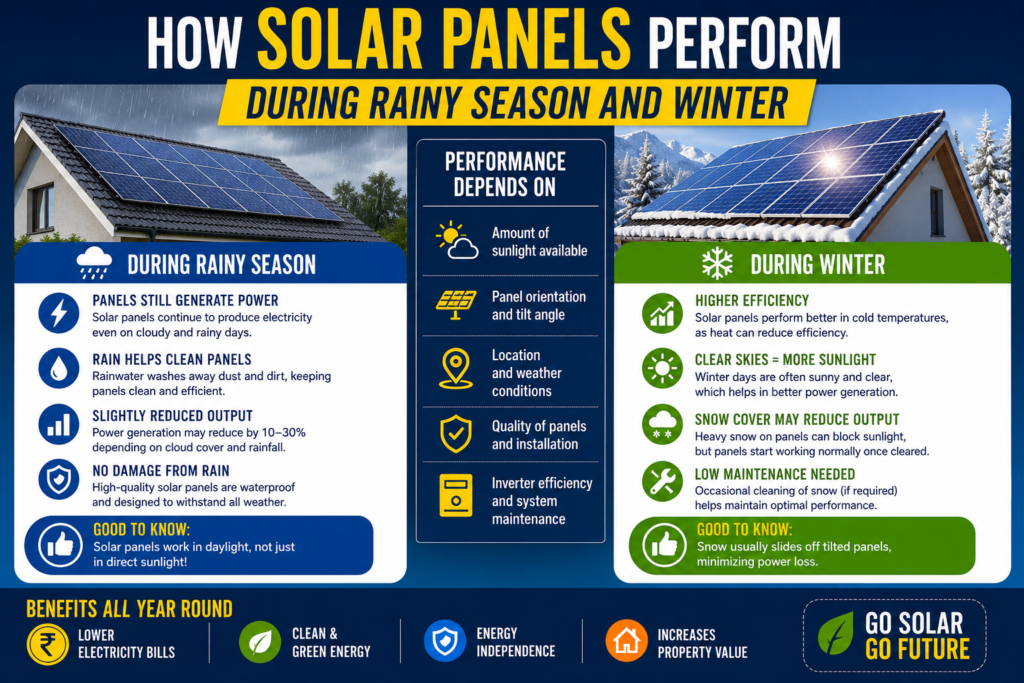
One of the most common concerns among homeowners and businesses considering solar energy is whether solar panels continue to generate electricity during the rainy season and winter. Many people assume that solar panels only work efficiently on bright, sunny days and become ineffective when the weather is cloudy or temperatures drop. Fortunately, this is a misconception.
Solar panels generate electricity from sunlight, not heat. Even during cloudy weather, rainfall, or colder months, solar panels continue to produce electricity by capturing available daylight. While energy production may decrease during periods of heavy cloud cover or shorter winter days, modern solar panels are designed to perform efficiently under a wide range of weather conditions.
In countries like India, where monsoon seasons bring frequent rain and many regions experience cooler winters, understanding seasonal solar performance is essential before investing in a rooftop solar system. Knowing how weather affects electricity generation can help you set realistic expectations, maintain your system properly, and maximize long-term savings.
In this comprehensive guide, we’ll explain how solar panels perform during rainy seasons and winter, the factors that influence their efficiency, and practical tips to keep your solar system operating at peak performance throughout the year.
1. Do Solar Panels Work During the Rainy Season?
Yes, solar panels continue to generate electricity during the rainy season. Although heavy clouds reduce the amount of sunlight reaching the panels, they still capture diffused sunlight to produce power.
On rainy days, electricity generation is generally lower than on clear, sunny days. However, modern photovoltaic (PV) panels are highly efficient and can still produce useful amounts of electricity under overcast conditions.
Key factors affecting rainy season performance include:
Cloud density
Rainfall intensity
Length of daylight
Panel orientation
Quality of solar panels
Local weather patterns
While output may decrease temporarily, your system continues supplying clean energy throughout the monsoon.
2. How Do Solar Panels Perform During Winter?
Contrary to popular belief, winter can actually be beneficial for solar panel efficiency.
Solar panels perform more efficiently at cooler temperatures because excessive heat can slightly reduce their operating efficiency. Although winter days are shorter and sunlight hours decrease, the lower panel temperatures help maintain better performance.
In many parts of India, winter conditions are mild, allowing solar systems to continue generating significant amounts of electricity.
Winter performance depends on:
Daylight duration
Sun angle
Local climate
Morning fog
Cloud cover
Dust accumulation
Overall, solar panels remain productive throughout the winter season.
3. Why Solar Panels Generate Less Electricity During Cloudy Weather
Solar panels require sunlight to produce electricity, so heavy cloud cover naturally reduces energy output.
However, clouds do not completely block sunlight. A considerable amount of diffused solar radiation still reaches the panels.
During cloudy conditions, solar panels typically generate a reduced percentage of their peak capacity depending on:
Cloud thickness
Weather conditions
Panel efficiency
Installation angle
Geographic location
Even on overcast days, your solar system contributes to your home’s electricity needs, reducing dependence on grid power.
4. Does Rain Improve Solar Panel Performance?
Surprisingly, rainfall can actually benefit solar panels.
Rain naturally washes away:
Dust
Dirt
Bird droppings
Pollen
Leaves
Air pollution deposits
Cleaner panels absorb more sunlight, improving overall energy production once clear weather returns.
Additional benefits of rainfall include:
Natural cleaning
Reduced maintenance frequency
Lower panel temperature
Improved light absorption
Although rain temporarily reduces electricity generation during storms, it often improves panel efficiency afterward by keeping the surface cleaner.
5. Common Weather Conditions That Affect Solar Panel Efficiency
Several weather conditions influence how much electricity your solar panels produce.
These include:
Heavy rainfall
Dense cloud cover
Morning fog
Dust storms
Air pollution
High humidity
Extreme heat
Shading from nearby trees or buildings
Among these, prolonged cloud cover generally has the greatest short-term impact on electricity generation.
Fortunately, annual solar production remains high because sunny days throughout the year compensate for temporary reductions during unfavorable weather.
6. Tips to Maximize Solar Panel Performance During Rainy Season and Winter
Proper maintenance helps ensure consistent electricity generation regardless of the season.
Best practices include:
Clean panels regularly before the monsoon.
Remove leaves and debris after storms.
Inspect mounting structures annually.
Check electrical wiring for moisture protection.
Monitor inverter performance.
Trim nearby tree branches causing shade.
Schedule professional inspections once a year.
Ensure proper drainage around rooftop installations.
These simple maintenance steps help maximize long-term performance and protect your investment.
7. Can Solar Panels Withstand Heavy Rain and Harsh Weather?
Yes. Modern solar panels are built to withstand challenging environmental conditions.
High-quality solar panels undergo rigorous testing for:
Heavy rainfall
Strong winds
High temperatures
Humidity
UV exposure
Mechanical loads
Corrosion resistance
Professional installation is equally important. Secure mounting structures, waterproof electrical connections, and proper earthing ensure safe operation during severe weather conditions.
Choosing certified equipment and experienced installers significantly improves system durability.
8. Is Solar Still Worth Installing in Areas with Long Monsoon Seasons?
Absolutely.
Even in regions that experience extended rainy seasons, solar energy remains an excellent investment because electricity generation is calculated over the entire year—not just during the monsoon.
Advantages include:
Significant annual electricity savings
Lower dependence on grid power
Government subsidies (where applicable)
Long equipment lifespan
Low maintenance requirements
Environmentally friendly energy production
Most regions receive enough annual sunlight to make rooftop solar financially worthwhile despite seasonal weather variations.
A professional solar installer can estimate expected annual energy production based on your location and weather conditions.
Conclusion
Solar panels are designed to generate electricity throughout the year, including during the rainy season and winter. While heavy clouds, rainfall, and shorter daylight hours can temporarily reduce electricity production, modern solar technology continues to perform efficiently under a wide range of weather conditions. In fact, cooler winter temperatures often improve panel efficiency, while rainfall naturally cleans the panel surface, helping restore optimal performance once the skies clear.
The key to maximizing your solar system’s output lies in choosing high-quality components, ensuring professional installation, and following a regular maintenance routine. Cleaning the panels, monitoring system performance, and scheduling periodic inspections will help your solar power system deliver reliable electricity for decades.
Whether you live in a region with heavy monsoons or mild winters, investing in solar energy remains a smart long-term decision. With proper planning and maintenance, your solar panels can provide substantial electricity savings, reduce your carbon footprint, and contribute to a cleaner, more sustainable future for your home or business.