How Solar Energy Helps Reduce Electricity Bills by Up to 90%
Electricity costs in India have been steadily increasing over the past few years, placing a significant financial burden on households and businesses alike. From air conditioners and refrigerators to washing machines and home office equipment, modern lifestyles depend heavily on electricity. As monthly utility bills continue to rise, many homeowners are searching for smarter and more sustainable ways to reduce their energy expenses.
One of the most effective solutions is solar energy. By installing a rooftop solar power system, homeowners can generate their own electricity directly from sunlight, reducing their dependence on the utility grid. Instead of paying for every unit of electricity consumed, your home can produce a large portion—or even most—of its daily energy requirements.
With advances in solar technology, government incentives, and net metering policies, residential solar systems have become more affordable than ever. Depending on your system size, energy consumption, and local electricity rates, solar panels can reduce monthly electricity bills by up to 90% and sometimes even more under ideal conditions.
In this comprehensive guide, we’ll explain how solar energy helps lower electricity costs, the factors that influence savings, and why investing in solar is one of the smartest financial decisions for homeowners in India.
1. How Solar Panels Generate Free Electricity
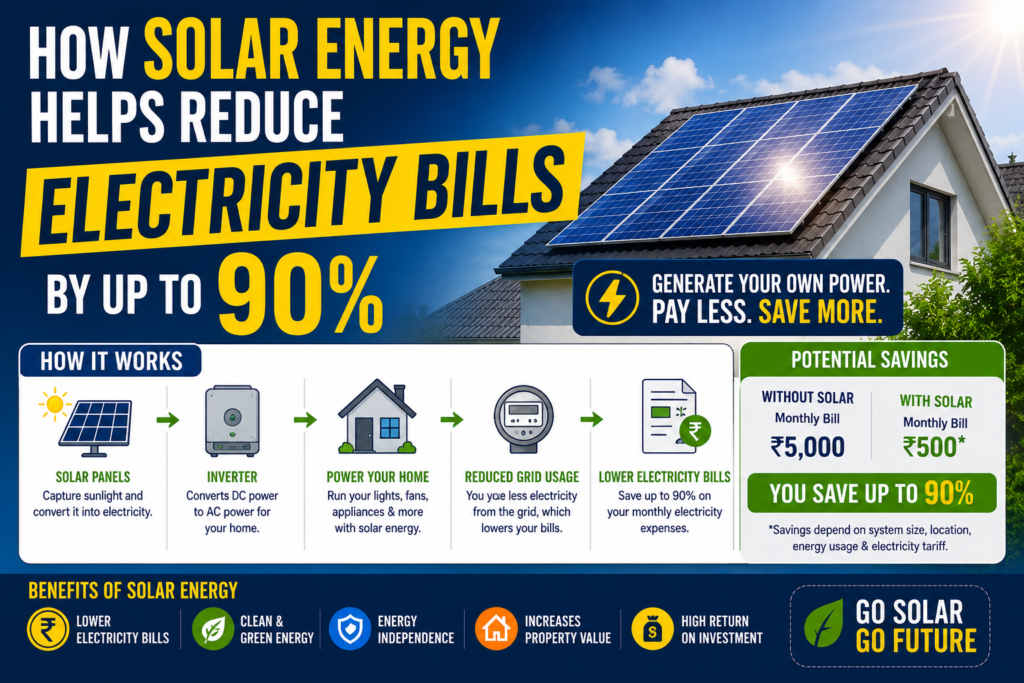
Solar panels convert sunlight into electricity using photovoltaic (PV) cells. During daylight hours, the panels generate direct current (DC) electricity, which is then converted into alternating current (AC) by a solar inverter for use in your home.
The electricity produced powers appliances such as:
Lights
Fans
Refrigerators
Air conditioners
Washing machines
Televisions
Computers
Water pumps
Because this electricity is generated from sunlight, you reduce the amount of electricity purchased from the grid, resulting in lower monthly bills.
After the initial installation, sunlight is completely free, making solar energy one of the most cost-effective long-term power sources.
2. How Solar Panels Reduce Electricity Bills
Every unit of electricity generated by your solar panels is one less unit you need to buy from your electricity provider.
For example:
During the day, your solar system powers your home directly.
Excess electricity can be exported to the grid through net metering.
At night, you draw electricity from the grid only when solar generation is unavailable.
Depending on your electricity usage and solar system capacity, homeowners can often reduce their electricity bills by 70% to 90%.
The higher your daytime electricity consumption, the greater your potential savings.
3. What is Net Metering and How Does It Save Money?
Net metering is one of the biggest financial advantages of installing an on-grid solar system.
Under a net metering arrangement:
Your solar panels generate electricity during the day.
Any excess electricity is sent to the utility grid.
The utility records exported electricity through a bi-directional meter.
You receive credits that offset future electricity consumption.
Benefits of net metering include:
Lower monthly electricity bills
Better return on investment
Maximum use of generated solar power
Reduced electricity wastage
Improved system efficiency
Net metering allows homeowners to maximize the financial value of every unit of electricity their solar system produces.
4. Factors That Affect Your Electricity Savings
Although solar energy can dramatically reduce electricity bills, actual savings depend on several factors.
These include:
Size of the solar system
Daily electricity consumption
Local sunlight availability
Roof orientation
Quality of solar panels
Inverter efficiency
Shading from nearby buildings or trees
Electricity tariff in your area
Proper system design ensures maximum energy generation and faster payback on your investment.
5. Long-Term Financial Benefits of Solar Energy
Solar panels are a long-term investment that continues generating savings for decades.
Most premium solar panels have a lifespan of 25 to 30 years or more, allowing homeowners to benefit from years of reduced electricity costs.
Financial advantages include:
Lower monthly utility bills
Protection against future electricity price increases
Increased property value
Minimal maintenance costs
Excellent return on investment
Although the initial installation requires an upfront investment, many homeowners recover the cost within a few years through electricity savings.
6. Government Subsidies Make Solar More Affordable
The Government of India encourages residential rooftop solar adoption through various subsidy programs.
Eligible homeowners may benefit from:
Reduced installation costs
Central financial assistance
Rooftop solar incentives
Net metering support
Faster return on investment
These government initiatives significantly reduce the upfront cost of installing solar panels, making clean energy more accessible to households across the country.
Consult an authorized solar installer to understand the latest subsidy eligibility and application process.
7. Additional Benefits Beyond Lower Electricity Bills
While saving money is the primary motivation for many homeowners, solar energy offers several additional advantages.
These include:
Reduced carbon emissions
Clean and renewable energy
Greater energy independence
Reliable electricity generation
Increased property value
Low maintenance requirements
Long equipment lifespan
Contribution to environmental sustainability
Installing solar panels is not only a financial decision but also a step toward a greener and more sustainable future.
8. Tips to Maximize Solar Savings
To achieve the highest possible reduction in electricity bills, follow these best practices:
Choose high-efficiency solar panels.
Install the correct system size.
Hire an experienced solar installation company.
Ensure proper panel orientation.
Clean panels regularly.
Monitor electricity generation.
Schedule annual maintenance.
Reduce unnecessary energy consumption inside your home.
Combining energy-efficient habits with a well-designed solar system helps maximize long-term savings and system performance.
Conclusion
Solar energy has become one of the most effective ways for homeowners in India to reduce rising electricity costs while investing in a cleaner and more sustainable future. By generating electricity directly from sunlight, rooftop solar systems significantly reduce dependence on the utility grid, helping households lower their monthly electricity bills by up to 90%, depending on system size, energy usage, and local conditions.
In addition to substantial financial savings, solar panels offer long-term benefits such as protection against future electricity tariff increases, low maintenance requirements, increased property value, and a lifespan of more than 25 years. Government subsidies and net metering programs further improve affordability and accelerate the return on investment.
If you’re looking for a reliable way to control energy expenses and achieve greater energy independence, installing a professionally designed solar power system is a smart choice. Consult a trusted solar installation company to assess your electricity needs, recommend the ideal system size, and help you begin your journey toward lower electricity bills and sustainable living.