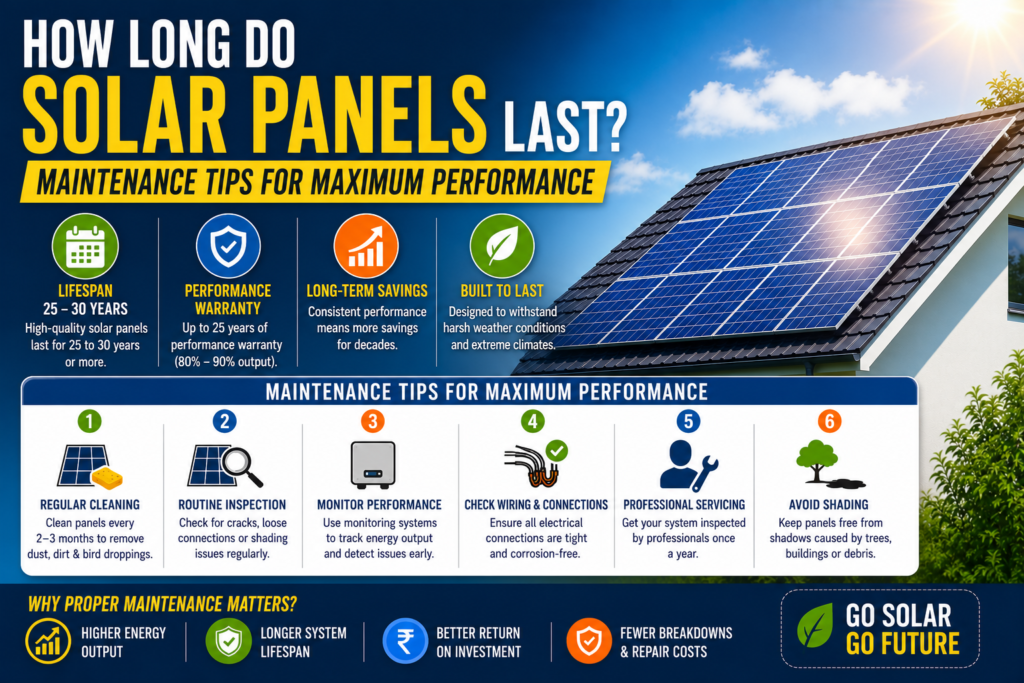
How Long Do Solar Panels Last? Maintenance Tips for Maximum Performance
Solar panels are one of the most reliable and long-lasting renewable energy investments available today. Whether you’re installing a rooftop solar system for your home or a commercial solar plant for your business, one of the most common questions is: How long do solar panels actually last?
The good news is that modern solar panels are designed to deliver clean and efficient electricity for 25 to 30 years or even longer. Thanks to continuous advancements in solar technology, today’s high-quality solar panels are more durable, efficient, and weather-resistant than ever before. However, while solar panels have a long lifespan, their performance depends on proper installation, high-quality components, and regular maintenance.
Many homeowners mistakenly believe that solar panels require no maintenance. Although they need very little attention compared to other energy systems, periodic cleaning, inspections, and performance monitoring are essential for maximizing energy production and extending the life of the entire solar system.
In this comprehensive guide, we’ll explain how long solar panels last, what affects their lifespan, and the best maintenance practices to ensure maximum performance and long-term savings.
1. How Long Do Solar Panels Typically Last?
Most premium solar panels come with a performance warranty of 25 to 30 years. This doesn’t mean they stop working after 30 years; it simply means manufacturers guarantee a certain level of electricity production during that period.
Many solar panels continue generating electricity for 35 to 40 years, although their efficiency gradually decreases over time.
Typical lifespan of major components:
Solar Panels: 25–30+ years
Solar Inverter: 10–15 years
Hybrid Inverter: 10–15 years
Battery (if installed): 8–15 years
Mounting Structure: 25+ years
Electrical Wiring: 20–30 years
Choosing premium-quality equipment from reputable manufacturers significantly increases the lifespan and reliability of your solar power system.
2. Factors That Affect the Lifespan of Solar Panels
Several factors influence how long your solar panels continue to perform efficiently.
The most important factors include:
Quality of solar panels
Quality of inverter
Installation workmanship
Local weather conditions
Dust and pollution levels
Roof orientation
Proper ventilation
Regular maintenance
Panels installed by experienced professionals using high-quality materials generally last much longer than poorly installed systems.
Environmental conditions such as heavy rainfall, extreme heat, hailstorms, and coastal salt exposure can also affect long-term performance if proper protective measures are not taken.
3. Understanding Solar Panel Degradation
Solar panels naturally lose a small percentage of efficiency every year, a process known as solar panel degradation.
Modern high-quality panels typically degrade at a very low annual rate, allowing them to continue producing most of their original output even after decades of operation.
For example:
Year 1: Minor reduction in performance
Year 10: Still producing high levels of electricity
Year 20: Strong and reliable output
Year 25–30: Continued electricity generation within warranty performance levels
Premium manufacturers generally offer performance warranties that guarantee a minimum output after 25 years, giving homeowners confidence in their long-term investment.
4. How Often Should You Clean Solar Panels?
Dust, bird droppings, leaves, and pollution can block sunlight from reaching the solar cells, reducing electricity generation.
The frequency of cleaning depends on your location.
General recommendations include:
Every 2–4 weeks in dusty areas
Monthly for most residential rooftops
After heavy storms or strong winds
More frequently near construction sites or industrial areas
When cleaning solar panels:
Use clean water
Use a soft sponge or microfiber cloth
Avoid abrasive materials
Never use harsh chemicals
Clean during early morning or evening when panels are cool
Regular cleaning helps maintain maximum efficiency throughout the year.
5. Routine Maintenance Tips for Maximum Performance
Although solar systems require minimal maintenance, regular inspections help prevent unexpected issues.
Important maintenance activities include:
Inspecting electrical wiring
Checking inverter performance
Tightening mounting bolts
Monitoring daily energy production
Removing nearby tree branches causing shade
Checking waterproofing around roof penetrations
Inspecting earthing and lightning protection
Scheduling annual professional inspections
Preventive maintenance not only improves efficiency but also extends the lifespan of the entire solar system.
6. Signs Your Solar System Needs Attention
Monitoring your system regularly helps identify potential problems before they become serious.
Watch for these warning signs:
Sudden drop in electricity generation
Inverter warning lights or error messages
Cracked or damaged panels
Loose electrical connections
Water leakage around mounting points
Unusual noises from the inverter
Visible corrosion on electrical components
Excessive dirt buildup
If you notice any of these issues, contact your solar installation company for a professional inspection rather than attempting complex repairs yourself.
7. How to Monitor Solar Panel Performance
Most modern solar systems include smart monitoring technology that allows homeowners to track performance in real time.
Using a mobile app or online monitoring portal, you can view:
Daily electricity generation
Monthly energy production
Lifetime energy output
Carbon emission savings
System efficiency
Inverter performance
Fault notifications
Historical performance reports
Regular monitoring helps detect issues early and ensures your system continues operating at peak efficiency.
8. Tips to Extend the Life of Your Solar Power System
Proper care can significantly increase the lifespan of your solar investment.
Follow these best practices:
Purchase high-quality solar panels from trusted brands.
Hire experienced and certified installers.
Clean panels regularly.
Schedule annual maintenance.
Monitor electricity generation through the mobile app.
Replace faulty components promptly.
Trim nearby trees to avoid shading.
Protect electrical equipment from water damage.
Investing in quality installation and routine maintenance ensures consistent energy production, lower operating costs, and maximum return on investment for decades.
Conclusion
Solar panels are built to last, making them one of the most dependable and cost-effective renewable energy solutions available today. With an expected lifespan of 25 to 30 years or more, a professionally installed solar system can provide reliable electricity and substantial savings for decades.
However, the longevity and efficiency of your system depend on more than just the quality of the panels. Proper installation, premium components, regular cleaning, routine inspections, and performance monitoring all play a vital role in maintaining peak efficiency and preventing costly repairs.
By following the maintenance tips outlined in this guide and partnering with a trusted solar installation company, you can maximize the performance of your solar system, protect your investment, and enjoy clean, renewable energy for many years to come.
If you’re planning to install solar panels or already own a solar power system, adopting a proactive maintenance routine will help you achieve the highest possible energy output, lower electricity bills, and a longer system lifespan.