Complete Solar Panel Maintenance Checklist for Homeowners
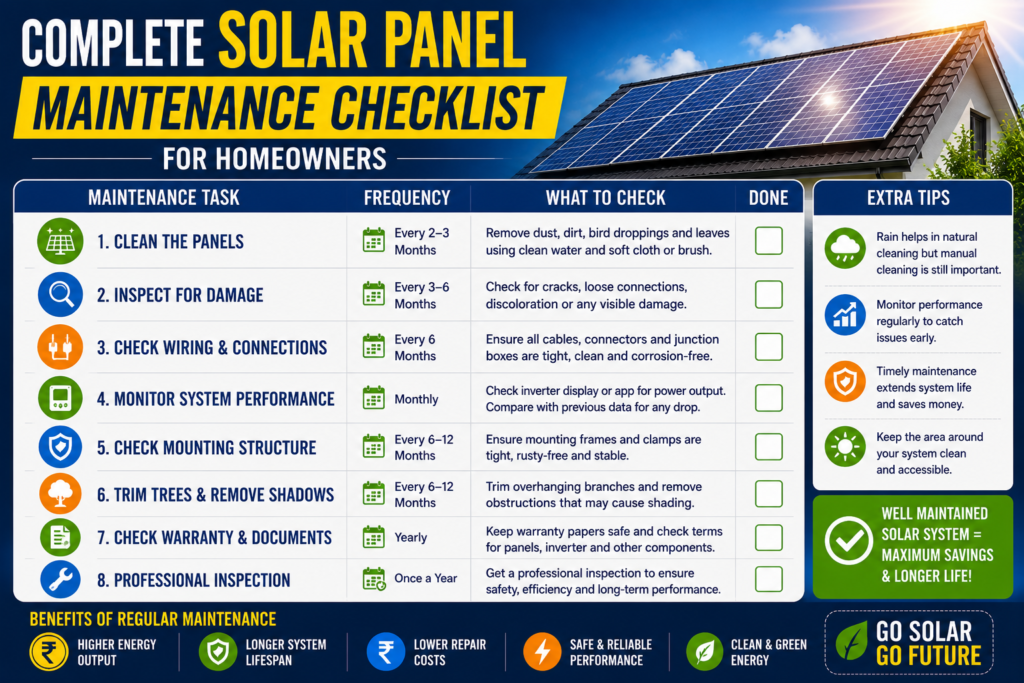
Installing a solar panel system is one of the smartest long-term investments for your home. A high-quality solar power system can generate clean electricity for 25 to 30 years or more, helping you reduce electricity bills, lower your carbon footprint, and increase your property’s value. However, like any valuable investment, solar panels require regular care to maintain peak performance and maximize their lifespan.
One of the biggest misconceptions about solar panels is that they require no maintenance. While solar systems are known for their durability and low maintenance requirements, neglecting routine inspections and cleaning can reduce energy production over time. Dust, bird droppings, leaves, pollution, loose electrical connections, and shading can all affect the efficiency of your system.
The good news is that maintaining solar panels is relatively simple and inexpensive. By following a regular maintenance schedule and addressing small issues early, homeowners can ensure consistent electricity generation, avoid costly repairs, and extend the life of their solar investment.
In this comprehensive guide, we’ll provide a complete solar panel maintenance checklist for homeowners, covering everything from cleaning and inspections to monitoring system performance and scheduling professional servicing.
1. Clean Solar Panels Regularly
Keeping your solar panels clean is one of the easiest ways to maintain maximum efficiency. Dust, dirt, bird droppings, leaves, pollen, and pollution can block sunlight from reaching the photovoltaic (PV) cells, reducing electricity generation.
Recommended cleaning frequency:
-
Every 2–4 weeks in dusty areas
-
Once a month for most residential homes
-
After heavy storms or strong winds
-
More often near construction sites or industrial zones
Cleaning tips:
-
Use clean water
-
Wipe with a soft sponge or microfiber cloth
-
Avoid abrasive brushes
-
Do not use harsh chemicals
-
Clean during early morning or evening when panels are cool
Regular cleaning helps maximize sunlight absorption and improve overall system performance.
2. Inspect Solar Panels for Physical Damage
Routine visual inspections help identify potential issues before they become expensive repairs.
Check for:
-
Cracked glass
-
Scratches
-
Broken frames
-
Loose mounting brackets
-
Corrosion
-
Water damage
-
Signs of impact from hail or falling branches
Although modern solar panels are designed to withstand harsh weather, physical damage should be repaired promptly to prevent further deterioration.
If you notice significant damage, contact your solar installation company instead of attempting repairs yourself.
3. Monitor Solar System Performance
Most modern solar systems include mobile apps or online monitoring platforms that allow homeowners to track energy production in real time.
Monitor:
-
Daily electricity generation
-
Monthly energy production
-
Lifetime energy output
-
Inverter status
-
System efficiency
-
Carbon emission savings
-
Error notifications
A sudden drop in electricity generation may indicate dirt buildup, shading, equipment failure, or electrical issues that require attention.
Regular monitoring helps detect problems early and ensures your system continues operating efficiently.
4. Check the Solar Inverter
The inverter is one of the most important components of your solar system because it converts DC electricity from the panels into AC electricity used in your home.
Inspect the inverter regularly for:
-
Warning lights
-
Error messages
-
Overheating
-
Unusual noises
-
Ventilation blockages
-
Dust accumulation
Keep the inverter area clean and well-ventilated to maintain optimal performance.
If the inverter displays fault codes or stops operating, contact a qualified technician immediately.
5. Inspect Wiring and Electrical Connections
Electrical components should be inspected periodically to ensure safe and reliable operation.
Look for:
-
Loose cables
-
Damaged insulation
-
Corroded connectors
-
Burn marks
-
Water leakage near electrical equipment
-
Damaged conduit pipes
Never touch exposed electrical wiring.
Electrical inspections should be performed by qualified solar technicians to ensure compliance with safety standards.
6. Remove Shading and Nearby Obstructions
Solar panels generate maximum electricity when exposed to direct sunlight.
Over time, nearby trees and structures may begin shading your panels.
Regularly check for:
-
Tree branches
-
Growing vegetation
-
New buildings
-
Water tanks
-
Antennas
-
Leaves accumulating on panels
Trim nearby trees when necessary and keep the area around your solar system clear to maximize sunlight exposure.
Even partial shading can reduce the output of multiple panels in a string.
7. Schedule Annual Professional Maintenance
Although homeowners can perform basic cleaning and visual inspections, professional servicing is recommended at least once a year.
A professional solar maintenance visit typically includes:
-
Comprehensive electrical inspection
-
Inverter diagnostics
-
Earthing resistance testing
-
Mounting structure inspection
-
Performance analysis
-
Wiring inspection
-
Cleaning recommendations
-
Safety compliance checks
Annual servicing helps identify hidden issues that may not be visible during routine homeowner inspections.
Professional maintenance also helps preserve warranty coverage for many solar system components.
8. Create a Seasonal Solar Maintenance Checklist
Different seasons bring different maintenance requirements.
Before Summer:
-
Clean solar panels
-
Check inverter ventilation
-
Inspect wiring
Before Monsoon:
-
Tighten mounting structures
-
Inspect waterproofing
-
Check drainage around roof
After Monsoon:
-
Remove leaves and debris
-
Inspect for water damage
-
Clean panel surfaces
Before Winter:
-
Review electricity generation
-
Trim nearby trees
-
Schedule annual inspection
Maintaining a seasonal checklist helps ensure consistent performance throughout the year and reduces the risk of unexpected issues.
Conclusion
A well-maintained solar power system can provide reliable, clean electricity for more than 25 years while delivering significant savings on your monthly electricity bills. Although solar panels require far less maintenance than most other energy systems, regular cleaning, routine inspections, performance monitoring, and annual professional servicing are essential for maximizing efficiency and extending system lifespan.
By following this complete solar panel maintenance checklist, homeowners can identify potential problems early, prevent costly repairs, improve electricity generation, and protect their long-term investment. Simple tasks such as cleaning the panels, monitoring inverter performance, checking for shading, and inspecting electrical connections can make a noticeable difference in overall system performance.
Whether you’ve recently installed a rooftop solar system or have been using solar energy for years, adopting a proactive maintenance routine will help ensure your system continues operating safely and efficiently. Partnering with an experienced solar installation and maintenance company will provide additional peace of mind and help you enjoy the full financial and environmental benefits of solar energy for decades to come.