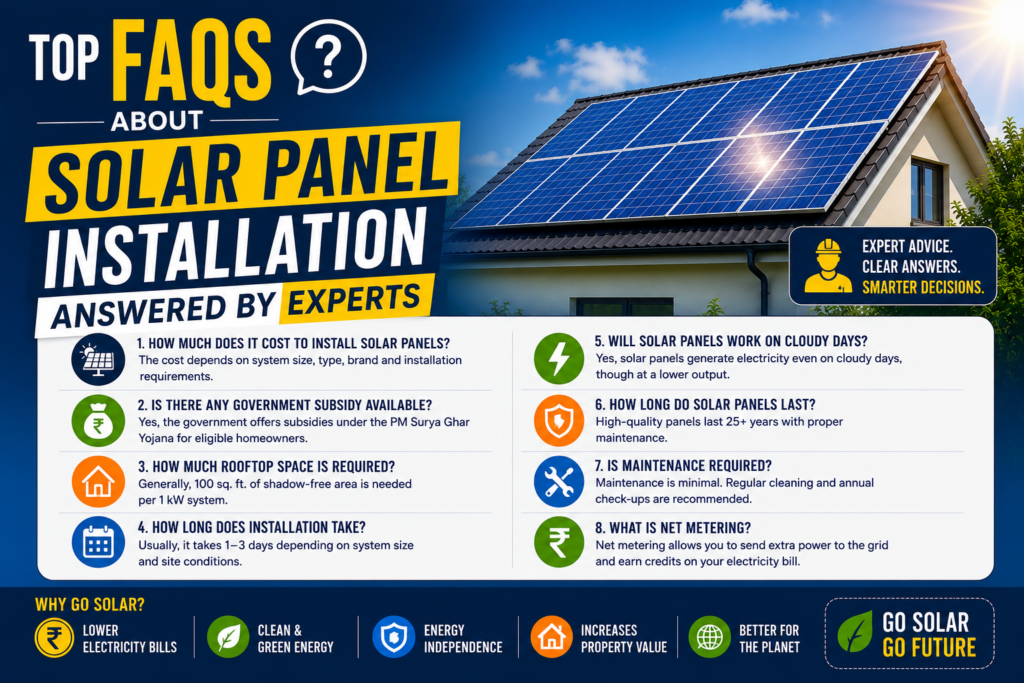
Top FAQs About Solar Panel Installation Answered by Experts
Solar energy has become one of the fastest-growing sources of renewable power in India. As electricity prices continue to rise and government initiatives encourage clean energy adoption, more homeowners and businesses are choosing rooftop solar systems to reduce electricity bills and become energy independent. However, before investing in a solar power system, most people have several questions about installation, costs, maintenance, performance, warranties, and government subsidies.
Understanding the answers to these common questions is essential for making an informed decision. Whether you’re installing solar panels for the first time or comparing different solar solutions, knowing what to expect can help you avoid costly mistakes and maximize your return on investment.
Modern solar technology is more reliable, affordable, and efficient than ever before. With professional installation and proper maintenance, a rooftop solar system can generate clean electricity for more than 25 years while significantly reducing your monthly electricity expenses.
In this comprehensive guide, our experts answer the most frequently asked questions about solar panel installation to help you understand the process, benefits, and long-term value of switching to solar energy.
1. How Much Does Solar Panel Installation Cost in India?
The cost of a solar panel system depends on several factors, including system size, equipment quality, roof type, installation complexity, and location.
Factors affecting installation cost include:
Solar system capacity (kW)
Type of solar panels
Inverter quality
Mounting structure
Roof condition
Installation labor
Government subsidies
Additional electrical work
Although the upfront investment may seem significant, homeowners typically recover the cost through electricity savings over several years. Government subsidy programs can further reduce the initial investment for eligible residential installations.
2. How Long Does Solar Panel Installation Take?
Most residential rooftop solar installations are completed within 1 to 3 days, depending on the size of the system and site conditions.
The overall project timeline includes:
Site inspection
System design
Approval process
Equipment procurement
Installation
Electrical connections
Inspection
Net meter installation
System commissioning
If government approvals or net metering applications are required, the complete process may take a few weeks from start to finish.
3. How Long Do Solar Panels Last?
Modern solar panels are designed to last 25 to 30 years or more.
Typical lifespan of major components:
Solar Panels: 25–30+ years
Solar Inverter: 10–15 years
Hybrid Inverter: 10–15 years
Battery (if installed): 8–15 years
Mounting Structure: 25+ years
Although panel efficiency gradually decreases over time, quality solar panels continue generating electricity well beyond their warranty period.
Routine maintenance helps maximize lifespan and performance.
4. Do Solar Panels Work During Rainy Season and Winter?
Yes.
Solar panels generate electricity from sunlight, not heat.
Even during:
Cloudy weather
Rainy season
Winter
Foggy mornings
they continue producing electricity, although energy generation may be lower than on bright sunny days.
Interestingly, cooler temperatures often improve solar panel efficiency because excessive heat can slightly reduce performance.
Rain also helps clean dust from the panel surface, improving efficiency once the weather clears.
5. Do Solar Panels Require Regular Maintenance?
Solar panels require relatively little maintenance compared to other energy systems.
Recommended maintenance includes:
Cleaning panels regularly
Inspecting wiring
Monitoring inverter performance
Removing leaves and debris
Checking mounting structures
Annual professional inspections
Most homeowners can perform basic cleaning themselves, while electrical inspections should be handled by qualified technicians.
Proper maintenance ensures maximum electricity generation and extends system life.
6. Can Solar Panels Completely Eliminate Electricity Bills?
In many cases, solar panels can reduce electricity bills by 70% to 90%, and in some situations, they may nearly eliminate monthly electricity costs.
Actual savings depend on:
System size
Daily electricity consumption
Roof orientation
Sunlight availability
Net metering
Local electricity tariffs
Homes with appropriately sized on-grid solar systems and net metering generally achieve the highest savings.
However, small fixed utility charges may still apply depending on your electricity provider.
7. Is My Roof Suitable for Solar Panel Installation?
Most residential roofs are suitable for solar installation if they receive adequate sunlight.
Before installation, professionals evaluate:
Roof size
Structural strength
Roof orientation
Tilt angle
Shading
Roof material
Available installation space
If rooftop installation is not practical, ground-mounted solar systems may be an alternative for properties with sufficient land.
A professional site survey determines the best installation option.
8. How Do I Choose the Right Solar Installation Company?
Choosing the right installer is just as important as selecting quality solar equipment.
Before hiring a solar company, check:
Industry experience
Customer reviews
Certifications
Previous installations
Warranty support
After-sales service
Product quality
Technical expertise
Maintenance services
A reputable installer will perform a detailed site assessment, recommend the appropriate system size, assist with subsidy and net metering applications, and provide long-term service support.
Investing in professional installation ensures maximum efficiency, safety, and long-term reliability.
Conclusion
Installing a rooftop solar system is a smart investment that offers long-term financial savings, greater energy independence, and a positive environmental impact. While many homeowners have questions about costs, installation timelines, maintenance, system performance, and government incentives, understanding the answers to these common FAQs makes the decision-making process much easier.
From choosing the right system size and installer to understanding warranties, net metering, and seasonal performance, proper planning is essential for maximizing the value of your solar investment. Modern solar technology is highly reliable, requires minimal maintenance, and can generate clean electricity for more than 25 years.
If you’re considering switching to solar, consult an experienced solar installation company for a professional site assessment and personalized recommendation. With the right guidance and a high-quality solar system, you can enjoy lower electricity bills, reliable energy production, and a more sustainable future for decades to come.