On-Grid vs Off-Grid vs Hybrid Solar Systems: Which One is Right for You?
As solar energy becomes increasingly popular in India, homeowners and businesses are exploring different types of solar power systems to reduce electricity costs and become more energy independent. However, one of the most common questions people ask before investing in solar is: Should I choose an On-Grid, Off-Grid, or Hybrid Solar System?
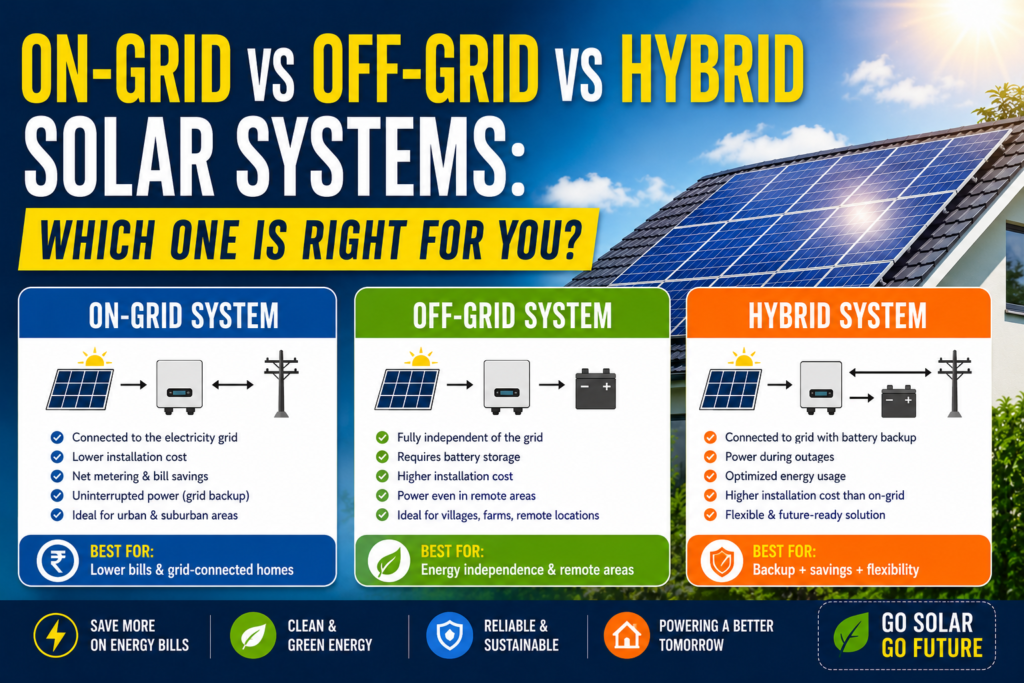
Each type of solar system is designed to meet different energy requirements and lifestyles. While an on-grid system is ideal for reducing electricity bills in areas with a reliable power supply, an off-grid system provides complete energy independence in remote locations. A hybrid solar system combines the best features of both, offering grid connectivity along with battery backup.
Choosing the right system depends on several factors, including your electricity consumption, location, budget, frequency of power cuts, and long-term energy goals.
In this comprehensive guide, we’ll explain how each solar system works, compare their advantages and disadvantages, and help you determine which option is best for your home or business.
1. What is an On-Grid Solar System?
An On-Grid Solar System, also known as a Grid-Tied Solar System, is connected directly to the local electricity grid. It generates electricity from sunlight and powers your home during the day. If your solar panels produce more electricity than you consume, the excess power is exported to the grid through net metering.
During nighttime or when solar production is low, your home automatically draws electricity from the utility grid.
Main Components:
Solar Panels
Grid-Tied Inverter
Net Meter
Mounting Structure
Electrical Protection Equipment
Advantages:
Lower installation cost
No battery maintenance
Maximum return on investment
Net metering reduces electricity bills
Ideal for urban and suburban homes
Limitations:
Does not provide backup during power outages.
Requires access to the utility grid.
2. What is an Off-Grid Solar System?
An Off-Grid Solar System operates independently without any connection to the electricity grid. It stores excess electricity in batteries, allowing you to use solar power even at night or during cloudy weather.
This type of system is commonly used in remote villages, farms, hill stations, construction sites, and areas where grid electricity is unavailable or unreliable.
Main Components:
Solar Panels
Off-Grid Inverter
Battery Bank
Charge Controller
Mounting Structure
Backup Generator (Optional)
Advantages:
Complete energy independence
Reliable power in remote locations
No monthly electricity bills
Suitable where grid access is unavailable
Limitations:
Higher installation cost
Battery replacement after several years
More maintenance compared to on-grid systems
3. What is a Hybrid Solar System?
A Hybrid Solar System combines the features of both on-grid and off-grid systems. It remains connected to the utility grid while also including battery storage for backup power.
During the day, solar panels power your home and charge the batteries. Excess electricity can be exported to the grid. If there is a power outage, the batteries automatically supply electricity to essential appliances.
This system is becoming increasingly popular in cities experiencing frequent power cuts.
Main Components:
Solar Panels
Hybrid Inverter
Battery Storage
Net Meter
Charge Controller
Electrical Protection Devices
Advantages:
Backup power during outages
Lower electricity bills
Better energy independence
Smart energy management
Uses both solar and grid power efficiently
Limitations:
Higher upfront investment
Battery maintenance required
More complex installation
4. On-Grid vs Off-Grid vs Hybrid Solar Systems: Key Differences
Understanding the differences between these three systems helps you choose the most suitable option.
| Feature | On-Grid | Off-Grid | Hybrid |
|---|---|---|---|
| Connected to Utility Grid | Yes | No | Yes |
| Battery Storage | No | Yes | Yes |
| Backup During Power Outage | No | Yes | Yes |
| Initial Installation Cost | Low | High | Medium to High |
| Electricity Bill Savings | Excellent | Complete Independence | Excellent |
| Maintenance | Low | Moderate | Moderate |
| Ideal For | Cities | Remote Areas | Areas with Frequent Power Cuts |
Each system has its own strengths depending on your energy needs and local conditions.
5. Which Solar System is Best for Homes in India?
For most homeowners in India, an On-Grid Solar System is the most economical choice because it offers maximum savings with lower installation costs.
However, the ideal system depends on your situation:
Choose On-Grid if:
Your area has reliable electricity.
You want to reduce monthly bills.
You don’t require backup power.
You want the fastest return on investment.
Choose Off-Grid if:
Your property has no grid connection.
You live in a remote location.
Energy independence is your priority.
Choose Hybrid if:
Your area experiences frequent power cuts.
You want battery backup.
You need uninterrupted electricity for essential appliances.
You want both savings and reliability.
6. Cost Comparison of On-Grid, Off-Grid, and Hybrid Solar Systems
The total installation cost depends on system size, component quality, location, and battery capacity.
Generally:
On-Grid Systems are the most affordable because they do not require batteries.
Off-Grid Systems are the most expensive due to battery banks and charge controllers.
Hybrid Systems fall in between but offer the added benefit of backup power.
Although hybrid and off-grid systems require higher initial investments, they provide greater energy security in areas with unreliable electricity.
When evaluating costs, consider the long-term savings, maintenance expenses, and expected lifespan of the equipment.
7. Factors to Consider Before Choosing a Solar System
Before making your decision, evaluate several important factors.
Consider:
Monthly electricity consumption
Budget
Roof size and sunlight availability
Frequency of power outages
Availability of grid connection
Government subsidy eligibility
Net metering policies
Future expansion requirements
A professional solar installer can perform an energy assessment and recommend the most suitable system for your property.
8. Why Professional Solar Installation Matters
Regardless of which solar system you choose, professional installation is essential for safety, efficiency, and long-term performance.
Experienced installers ensure:
Correct system sizing
Proper roof assessment
High-quality component selection
Safe electrical wiring
Compliance with local regulations
Net metering assistance
Performance testing
Ongoing maintenance support
A professionally installed solar system delivers maximum electricity generation, better reliability, and a longer service life.
Conclusion
Choosing between an On-Grid, Off-Grid, and Hybrid Solar System depends entirely on your energy requirements, budget, and location.
If your goal is to reduce electricity bills and you have a reliable grid connection, an On-Grid Solar System offers the best value and fastest return on investment. If you live in a remote area without dependable grid access, an Off-Grid Solar System provides complete energy independence. For homeowners and businesses seeking uninterrupted power along with lower electricity costs, a Hybrid Solar System is the ideal solution, combining the advantages of both grid connectivity and battery backup.
Before making your decision, consult an experienced solar installation company to assess your property’s energy needs, roof conditions, and future power requirements. With the right solar system, you can enjoy clean, reliable, and affordable electricity while contributing to a more sustainable future.